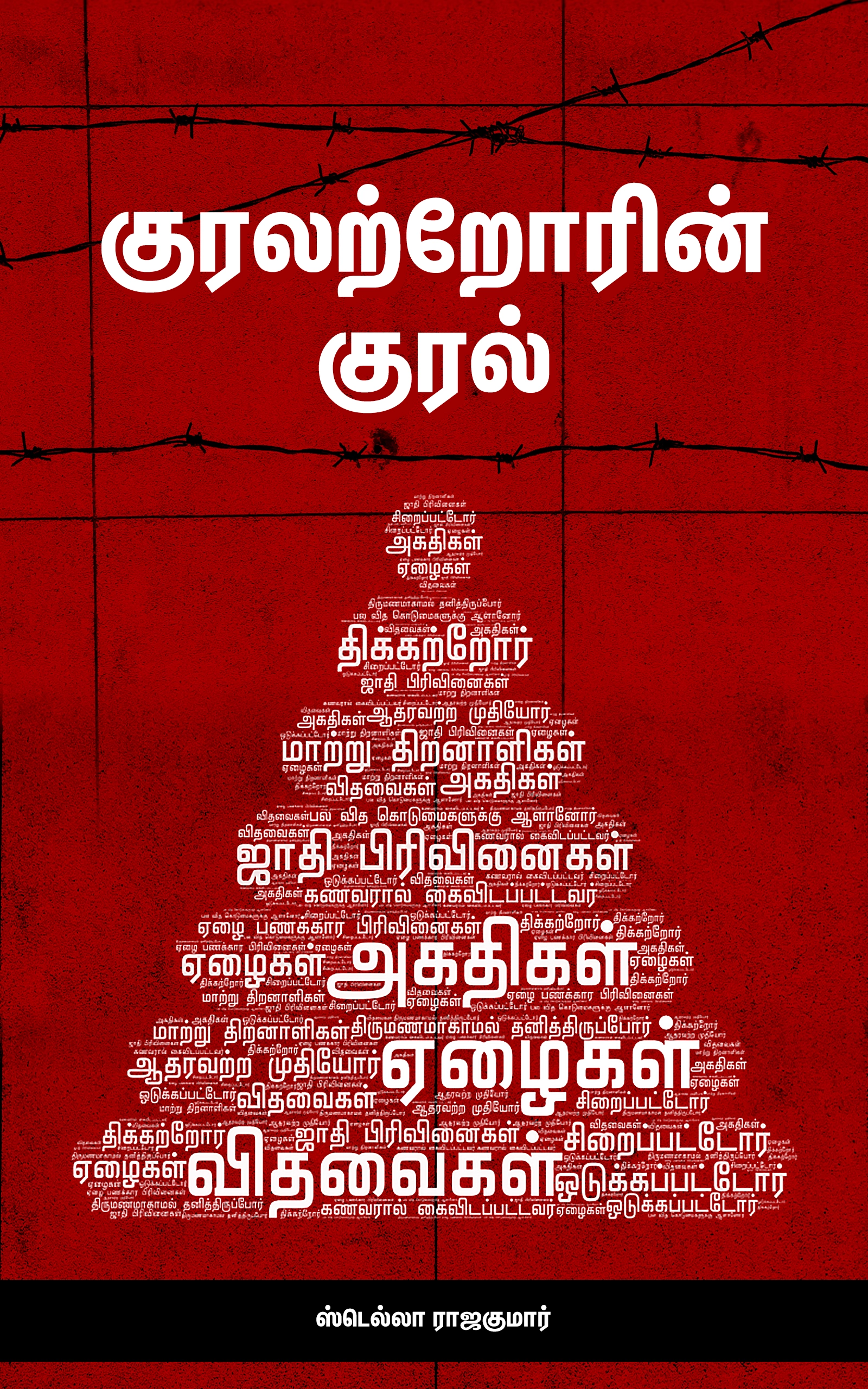
The Voice of the Voiceless is the most socially engaged of the Kirubalayam books - a sustained argument from Scripture and contemporary experience that God is on the side of the oppressed, that the church must speak for those who cannot speak for themselves, and that both the oppressed and the oppressor can find healing through God's grace.
Co-written by Stella Rajakumar and her son Sam Rajakumar, and published by Kirubalayam Ministry, the book surveys real forms of oppression in Tamil Nadu society - caste discrimination, domestic violence, exploitation of widows, and more - and grounds the church's response in a series of biblical case studies of the oppressed being heard by God. It is relevant to any Christian reader or church leader wrestling with the church's responsibility toward the marginalised.
On This Page
About This Book
Published by Kirubalayam Ministry in 2023, The Voice of the Voiceless was co-written by Stella Rajakumar, M.Sc. (Psy), M.Ed., drawing on 26 years of direct engagement with marginalised people, and her son Sam Rajakumar, M.Tech., who brings additional perspective from his work in the technology sector while serving in ministry part-time. The book responds to what the authors identify as a specific ecclesiological failure: middle-class Tamil Christians who "remain neutral" when oppression occurs in their own community.
The book is organised into nine chapters, moving from a sociological survey of oppression through Old and New Testament case studies of the oppressed being heard by God, case studies of oppressors and their downfall, and a closing call to the church's practical response.
Central Message
The book's theological spine is Psalm 9:9 - "The Lord is a refuge for the oppressed, a stronghold in times of trouble." The authors argue that God's heart is specifically and consistently with those who are crushed and voiceless, and that standing by while someone is oppressed while calling yourself "neutral" is itself a sin - illustrated by the vivid parable that if the neighbour's house is on fire, within minutes your house will burn too.
Main Themes
God's Preferential Concern for the Oppressed
The Lord is a refuge for the oppressed - not that God ignores the oppressor, but that His heart is specifically with the crushed and voiceless (Psalm 9:9).
The Imago Dei as the Ground of Human Dignity
Every person bears the image of God and possesses inherent dignity that no social system has the right to strip away.
Providence - God Works Through Injustice
Joseph's story is paradigmatic: what was intended for harm, God intended for good (Genesis 50:20).
The Complicity of Neutrality
Standing by while someone is oppressed, calling yourself neutral, is itself a sin - reflecting the prophetic tradition's insistence on speaking up.
Forgiveness and Restoration for the Oppressor
The book consistently shows that God offers forgiveness and restoration to those who repent, even those who have caused great harm.
The Church as Voice for the Voiceless
Pure religion is caring for orphans and widows in their distress (James 1:27) - the church must actively advocate, not merely observe.
Chapter-by-Chapter Summary and Analysis
Chapter 1: Introduction
Establishes the book's thesis: God is on the side of the oppressed, not the oppressor. Social injustice has roots in selfishness and financial greed, and the silence of bystanders who claim to be "neutral" is itself complicity.
Chapter 2: Various Forms of Oppression in Society
A detailed survey of oppression in Tamil Nadu: systemic poverty, land seizure from the poor, caste discrimination, gender-based injustice, domestic violence, sexual exploitation, prison violence, and the particular vulnerability of widows and abandoned women.
Chapter 3: Biblical Examples - The Oppressed Heard by God
Eight Old Testament case studies: Hagar (the God who sees me), Joseph (intended for evil, used for good), the Hebrew slaves in Egypt (heard after 400 years), Ruth (a widowed foreigner who entered Christ's lineage), Hannah, David, Elijah, and Jeremiah.
Chapter 4: New Testament Examples
Three New Testament scenarios: the man born blind, judged as a sinner and healed as a testimony; the woman caught in adultery, publicly condemned and met with grace; and the widow of Nain, whose dead son Jesus raised out of compassion.
Chapter 5: Oppressors and Their End
Three oppressor case studies: Pharaoh's hardened heart leading to the destruction of his army; Jezebel's theft of Naboth's vineyard ending in a brutal death; and Haman's own gallows used for his execution.
Chapters 6-8: Modern Oppression - Abandonment, Caste, and Violence
Women abandoned by their husbands face ridicule and vulnerability without legal support, and the church must be the tangible expression of God's care for the fatherless and widowed. Caste discrimination continues to exclude people from education, marriage, and dignity despite legal prohibition, with Galatians 3:28 as the church's theological mandate to address it first within its own community. Domestic violence, trafficking, and prison injustice are addressed pastorally, grounded in Jesus's words: "I was in prison and you came to me."
Chapter 9: God's Response and the Church's Call
God's faithfulness to the oppressed is certain even when delayed. The church is called to be the voice of the voiceless - advocating for justice, caring practically for widows and orphans, rejecting caste, and treating every person as an image-bearer of God.
Key Bible Passages
- The Lord is a refuge for the oppressed, a stronghold in times of trouble - the book's theological spine.Psalm 9:9
- You are the God who sees me - Hagar's testimony, the book's governing image.Genesis 16:13
- You intended to harm me, but God intended it for good - the model of redemptive providence.Genesis 50:20
- There is neither Jew nor Greek, slave nor free - the theological basis for opposing caste discrimination.Galatians 3:28
- Pure religion is to look after orphans and widows in their distress.James 1:27
- Speak up for those who cannot speak for themselves - the book's closing call to action.Proverbs 31:8-9
- I was in prison and you came to me - the basis for prison ministry.Matthew 25:36
Key Christian Principles
- Neutrality is not innocence. Standing by while injustice occurs is itself a moral failure, not a safe middle ground.
- Justice and grace together. The book holds both the certainty of God's justice toward oppressors and the offer of restoration to those who repent.
- Advocacy as discipleship. Speaking for the voiceless is presented not as an optional social concern but as an outworking of the Gospel itself.
Practical Application
For personal use:
- Examine whether you have ever been a bystander to injustice in your family, workplace, or community, and repent of the neutrality that enabled it to continue.
- Identify one specific marginalised person or group in your immediate community and take one concrete step toward advocacy or practical care.
- If you have been oppressed, receive the assurance from Psalm 9:9 that God is your refuge - bring your specific situation before Him and trust His timing.
For church use:
- Conduct a congregational audit of caste attitudes - are people of lower-caste background fully included in church life, leadership, and fellowship?
- Establish practical support for abandoned women and widows in the congregation: legal aid referrals, economic empowerment, and prayer.
- Begin or support prison ministry, following Jesus's direct command in Matthew 25:36.
Key Takeaways
- The Voice of the Voiceless is a biblically grounded social justice manifesto demonstrating that God consistently aligns Himself with the oppressed and calls His people to do the same.
- It surveys real forms of oppression in Tamil Nadu and argues theologically that neutrality in the face of injustice is itself complicity.
- Both the oppressed and the oppressor are offered the same transforming grace of the Gospel - rescue for one, transformation for the other.
Frequently Asked Questions
Who wrote The Voice of the Voiceless?
The book was co-written by Stella Rajakumar, M.Sc. (Psy), M.Ed., and her son Sam Rajakumar, M.Tech., and published by Kirubalayam Ministry in 2023.
What is the central message of the book?
God is a refuge for the oppressed (Psalm 9:9), and the church is called to actively speak and act for those who cannot speak for themselves rather than remain neutral.
Does the book address caste discrimination specifically?
Yes. A dedicated chapter addresses caste discrimination, grounding the church's mandate to oppose it - first within its own community - in Galatians 3:28.
Does the book only address the oppressed, or also oppressors?
Both. The book includes case studies of oppressors such as Pharaoh, Jezebel, and Haman, alongside a consistent theme of forgiveness and restoration for those who repent.
Is this summary a replacement for reading the original book?
No. This page is a study aid covering the book's structure and major arguments. Readers are encouraged to read the complete original book for its full biblical and pastoral treatment.
Get the Original Book
This page is a summary and study aid. For the complete biblical case, read the original book by Stella and Sam Rajakumar.
Related Kirubalayam Publications
This summary and chapter-by-chapter analysis was prepared with AI assistance from the published work and is provided as a study aid. Readers are encouraged to refer to the original book for the complete treatment of the subject.