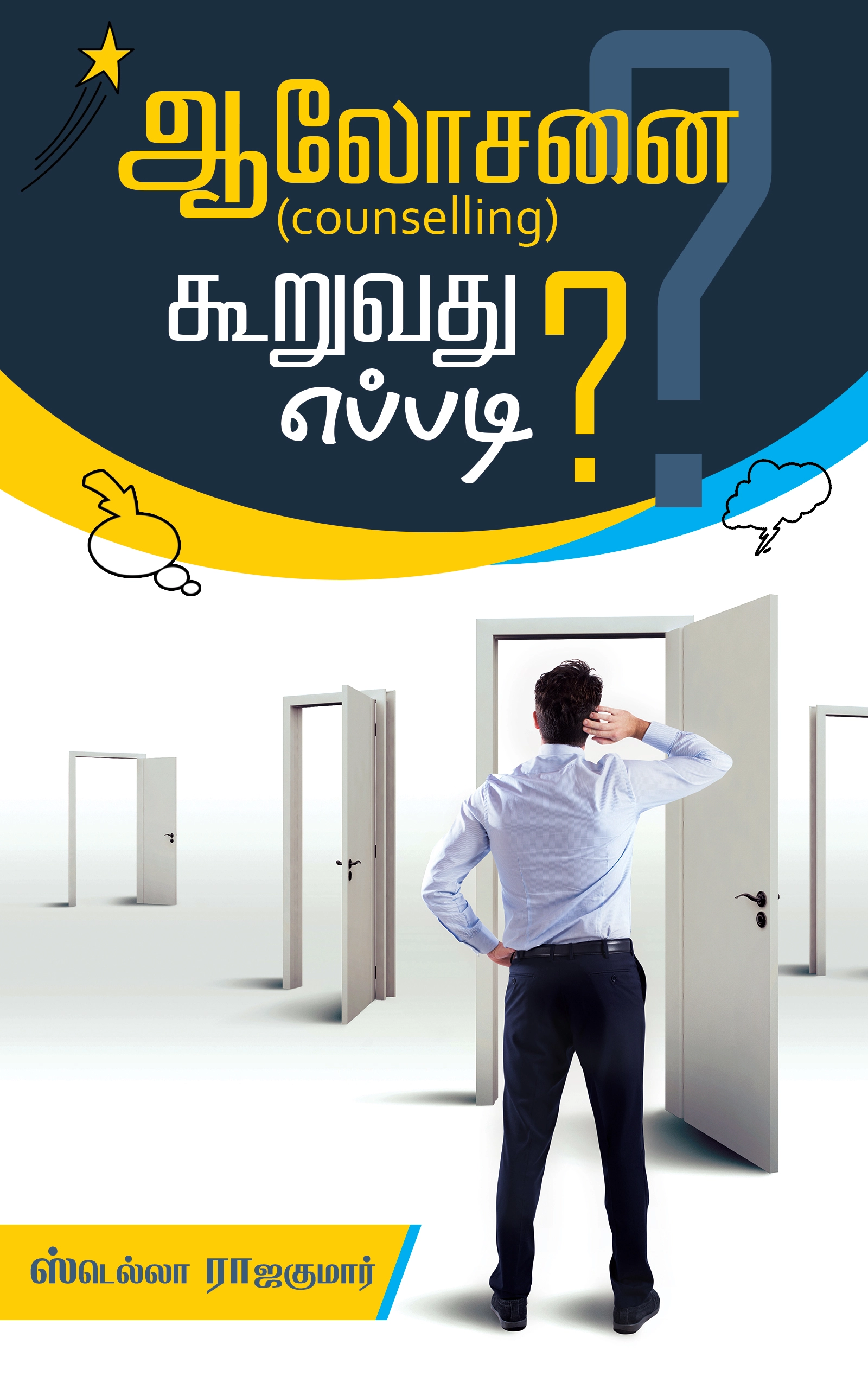
How to Give Counselling is a concise, practitioner-authored manual for Christian counsellors by Stella Rajakumar, drawing on 26 years of family welfare counselling practice in Tamil Nadu. It defines counselling, distinguishes its major types, teaches core skills, and illustrates every principle through twenty richly detailed case studies.
Published by Kirubalayam Ministry, the book is addressed to teachers, doctors, social workers, church ministers, and lay counsellors, grounding the entire counselling enterprise in the conviction that God has given His servants the power to change lives through words. It is relevant to anyone in a position of pastoral or professional care who wants to counsel with both compassion and integrity.
On This Page
About This Book
Published by Kirubalayam Ministry in 2023, How to Give Counselling was written by Stella Rajakumar, M.Sc. (Psy), M.Ed., who served 26 years as a family welfare counsellor alongside ten years as a psychology lecturer and seven years in direct social work. The book is not primarily theoretical but a practitioner's manual shaped by hundreds of real-life counselling interactions.
The book is organised into eleven chapters, moving from the definition and types of counselling through practical skills - rapport, empathy, confidentiality, active listening, ethics - and closing with twenty detailed case studies, ten from family welfare counselling and ten from school-based teacher-counselling.
Central Message
The book opens with Isaiah 50:4 - "The Lord God has given me the tongue of the learned, that I should know how to speak a word in season to him who is weary." Rajakumar grounds all counselling effectiveness in God's gift of wise speech, not merely human technique, and closes with a call to every reader - counsellor, teacher, doctor, or caring Christian - to become an agent of encouragement in a broken world.
Main Themes
God's Word as the Instrument of Life-Change
The book grounds counselling effectiveness in God's gift of wise speech to the weary, not merely human technique (Isaiah 50:4).
Christ-like Compassion
Empathy is presented as an incarnational act that mirrors Christ's own entering into human suffering, not merely a psychological skill.
The Sanctity and Value of Every Person
Every person who comes for counselling is treated as possessing inherent dignity and worth, regardless of their situation.
Confidentiality as Covenantal Duty
What someone entrusts to a counsellor in vulnerability must be protected as sacred, reflecting the trustworthiness required of God's servants.
Human Agency and Empowerment
The counsellor must never compel the counsellee's choice - solutions must be discovered by the person themselves.
Practical Mercy as Gospel Expression
Referrals to welfare schemes, legal aid, and bank loans reflect the biblical call to defend the oppressed and plead the case of the widow (Isaiah 1:17).
Chapter-by-Chapter Summary and Analysis
Chapters 1-2: What Is Counselling? and Types of Counselling
Professional counselling is defined as specialised, trained-led guidance that helps a person identify the root of their problem and discover their own solution, requiring sustained engagement over multiple sessions. Six major types are surveyed: marital, pre-marital, addiction, mental health, student, and guidance and referral counselling.
Chapters 3-4: Building Rapport, and Empathy and Compassion
Rapport-building begins with calling the person by name and creating an atmosphere of trust. Empathy is distinguished from sympathy as placing oneself in another's position - if a widow comes for counselling, the counsellor must mentally inhabit the widow's perspective.
Chapters 5-6: Confidentiality, and Non-Verbal Communication
Everything shared in counselling must be kept absolutely confidential - a teacher-counsellor must never share what a student discloses. Non-verbal dimensions - facial expression, active listening, and appropriate gestures - communicate as much as spoken words.
Chapters 7-8: Enabling the Person's Own Solution, and Ethics
The counsellor presents multiple possible solutions but must never compel the counsellee to choose a particular one. Ethical boundaries include conducting opposite-sex counselling in open, observable spaces, and never counselling one's own relatives.
Chapter 9: Causes of Marital Problems
Eleven common causes of marriage breakdown are listed, including financial pressure, family interference, ego conflict, and alcoholism - with the author identifying the devil as the ultimate source of family breakdown beneath these surface causes.
Chapter 10: Case Studies - Family Welfare Counselling
Ten detailed, anonymised case studies from the author's 26-year practice, including a couple reconciled after 15+ sessions, a widow enabled to start a business through a bank loan, and a dyslexic student who completed nursing and married happily.
Chapter 11: Case Studies - The Teacher-Counsellor
Ten case studies from a school head teacher's 35-year career, including a student whose suicide was averted by a home visit at a critical moment, and a violent student transformed by Scripture class counsel.
Key Bible Passages
- The Lord God has given me the tongue of the learned, to speak a word in season to him who is weary - the book's opening foundation.Isaiah 50:4
- A word fitly spoken is like apples of gold in settings of silver.Proverbs 25:11
- Encourage one another and build each other up - the book's closing call to the wider church.1 Thessalonians 5:11
- Learn to do right; seek justice. Defend the oppressed. Plead the case of the widow.Isaiah 1:17
- Do to others what you would have them do to you - the Golden Rule implied throughout the ethics section.Matthew 7:12
Key Christian Principles
- Restoring agency, not dependency. The counsellor's role is to present options, not to prescribe solutions - true help empowers the counsellee to choose.
- Confidentiality as sacred trust. What is shared in vulnerability must be protected absolutely, mirroring the pastoral seal of confession.
- Whole-person care. Emotional, spiritual, practical, and legal needs must all be addressed together - spiritual support alone is incomplete.
Practical Application
For personal use:
- Develop listening skills as a spiritual discipline - before speaking, ask whether you fully understand what the person is experiencing.
- Cultivate empathy by consciously placing yourself in the perspective of the person you are helping before advising them.
- Maintain strict confidentiality in all pastoral and peer support conversations - treat what people share with you as sacred trust.
- Know your referral network - government welfare schemes, legal aid centres, and de-addiction centres - so practical advocacy can accompany emotional support.
For church use:
- Establish a trained lay counselling team within the local church - teachers, nurses, and social workers already have transferable skills.
- Create a referral directory of local welfare resources accessible to church counsellors.
- Train youth workers and Sunday school teachers in basic student counselling principles.
Key Takeaways
- How to Give Counselling grounds Christian counselling in the theological conviction that God gives His servants "the tongue of the learned" to speak life-giving words to the weary.
- It teaches core skills - rapport, empathy, active listening, confidentiality, and ethical boundaries - through twenty detailed real-life case studies.
- Counselling integrated with practical social advocacy, not spiritual support alone, produces measurable and lasting life transformation.
Frequently Asked Questions
Who wrote How to Give Counselling?
The book was written by Stella Rajakumar, M.Sc. (Psy), M.Ed., and published by Kirubalayam Ministry in 2023, drawing on her 26 years of family welfare counselling practice.
Who is this book written for?
It is written for teachers, doctors, social workers, church ministers, and lay counsellors who want practical, Scripture-grounded tools for helping people in crisis.
Does the book use real case studies?
Yes. It includes twenty detailed, anonymised case studies - ten from the author's own family welfare counselling practice, and ten from a school head teacher's career - with names changed per the author's disclaimer.
What ethical principles does the book teach?
It teaches strict confidentiality, conducting opposite-sex counselling in open and observable spaces, never counselling one's own relatives, and always letting the counsellee make the final decision.
Is this summary a replacement for reading the original book?
No. This page is a study aid covering the book's structure and major teachings. Readers are encouraged to read the complete original book for its full case studies and practical guidance.
Get the Original Book
This page is a summary and study aid. For the complete counselling manual with all twenty case studies, read the original book by Stella Rajakumar.
Related Kirubalayam Publications
This summary and chapter-by-chapter analysis was prepared with AI assistance from the published work and is provided as a study aid. Readers are encouraged to refer to the original book for the complete treatment of the subject.